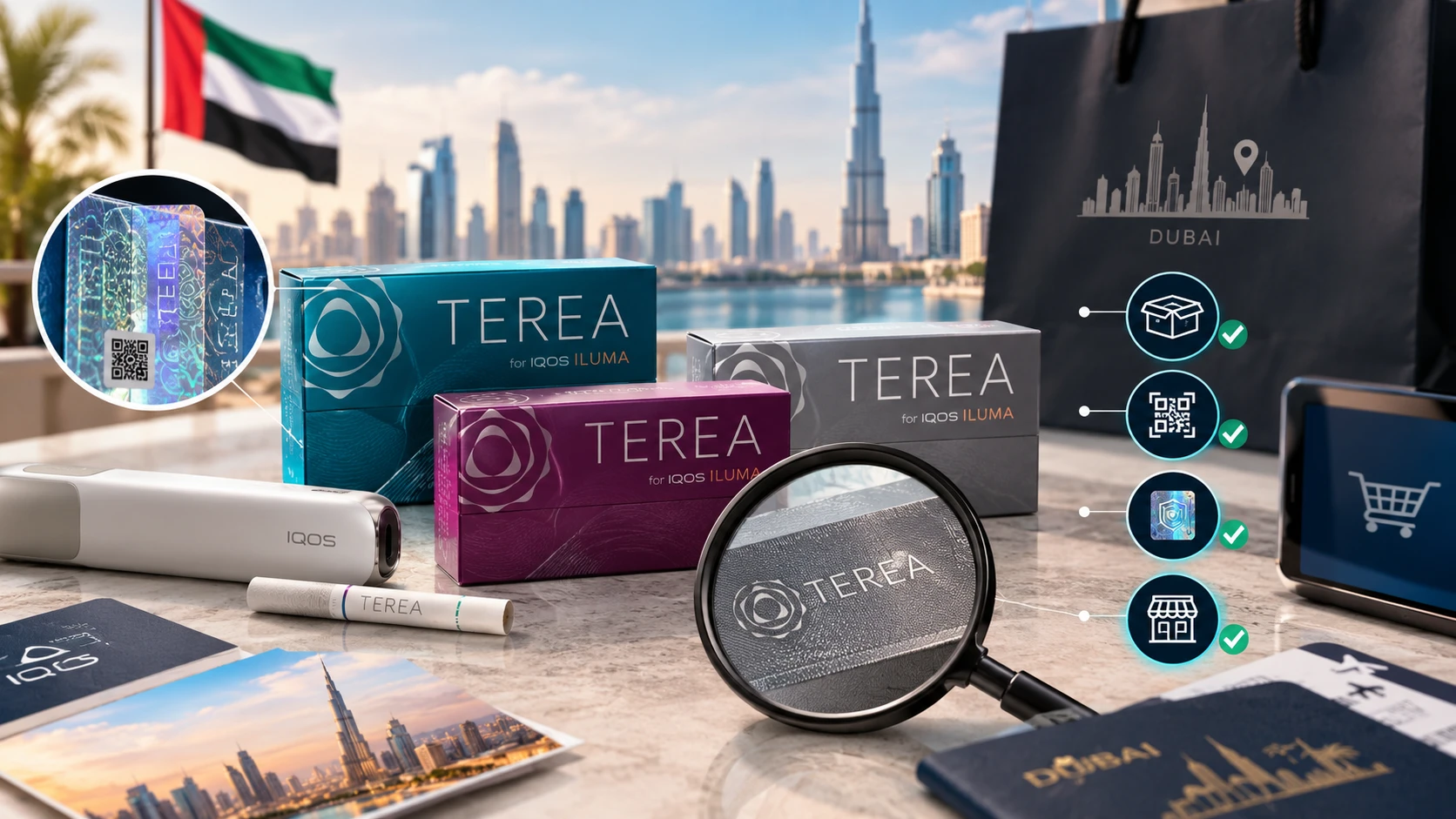
Buying TEREA in Dubai should be straightforward, but it is worth taking a few minutes to check what you are purchasing. You might find different packaging styles, imported editions, and prices across online stores and local retailers. That does not automatically mean a product is fake, but it does mean you should know what to look for.
The tricky part is that counterfeit products do not always look obviously different from genuine ones. A barcode, neat packaging, or professional-looking website is not enough to prove authenticity on its own.
In this guide, you will learn how to check TEREA packaging, read product labels, assess a seller, and recognise warning signs before buying in Dubai or elsewhere in the UAE.
Why Should You Check TEREA Before Buying in Dubai?
When comparing TEREA products, it is easy to focus on the flavour, price, or country edition. However, the seller and the product’s traceability deserve just as much attention.
For example, you might see the same flavour listed by two different shops at noticeably different prices. One seller provides clear business details and answers questions about the product’s source. The other offers little information and pressures you to order immediately.
That difference does not prove that one product is genuine and the other is counterfeit. It does, however, give you a reason to investigate further.
Checking the packaging, product information, and seller together can help you make a more informed decision. It is also important to remember that TEREA contains tobacco and is intended for adult users of compatible IQOS ILUMA devices.
1. Examine the TEREA Packaging Carefully
Start with the pack itself. You do not need specialist equipment to notice obvious inconsistencies, although a visual inspection cannot establish authenticity with certainty.
Look at the Print and Overall Finish
Check whether the product name, printed information, colours, and text appear consistent and professionally produced. Blurred lettering, spelling mistakes, uneven printing, or poorly aligned labels deserve attention.
Also look for signs that the packaging has been damaged or altered. Torn areas, suspiciously placed stickers, or information that appears to have been covered up may be reasons to ask the seller for an explanation.
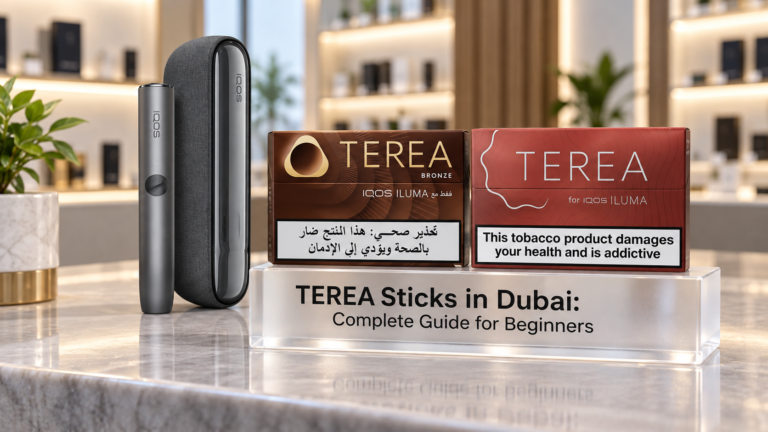
Keep in mind that packaging can vary between countries and product editions. A difference from a picture you found online is not automatically evidence of counterfeiting.
Check the Seal and Signs of Tampering
Before buying, look for visible damage around the packaging and any seal provided for that edition. The pack should not show unexplained signs of being opened, resealed, or altered.
Do not assume that every genuine TEREA pack must have an identical seal. Packaging features can differ by market and product version, so compare like with like whenever possible.
If a seller cannot explain why a pack appears to have been opened or resealed, it is safer to choose another option.
Read the Printed Product Information
Take a moment to read the product name and other printed details. Check that the information is legible and that the packaging does not contain obvious inconsistencies.
If you are buying a particular variant, make sure the name on the pack matches the product you ordered. This is especially useful when comparing similar names or flavours.
A well-finished pack is a positive sign, but it is only one part of the assessment. Counterfeit packaging can also look convincing.
2. Check the TEREA Labels and Country Edition
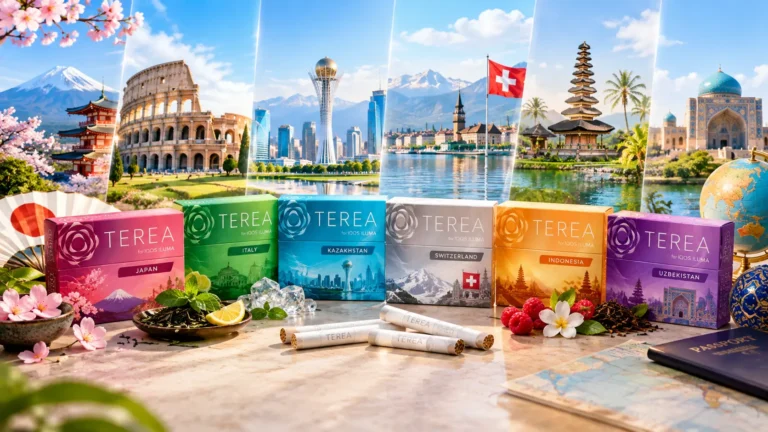
TEREA products may be sold in different market editions. That can affect packaging, labelling, and the variants available from one retailer to another.
Confirm the Exact Variant
Suppose you want TEREA Silver but the online listing uses a generic product photo. Before placing an order, ask the seller to confirm the exact variant and, where possible, provide a clear photo of the actual packaging.
Do the same when purchasing Amber, Sienna, Yellow, Bronze, or another variant. Similar-looking packs and broad product descriptions can lead to confusion.
The name on the product should match the item advertised. If the seller sends a different variant without explaining the change, ask for clarification before accepting it.
Does Imported TEREA Mean It Is Fake?
No. An imported edition is not automatically counterfeit.
A retailer may sell a product intended for another market, and its packaging may differ from the edition you usually see in Dubai. The important questions are whether the product’s origin can be reasonably established, whether its labelling is appropriate, and whether the seller can explain its sourcing.
Do not rely on the country name alone to decide whether a product is genuine. If the packaging raises questions, ask the seller for more information rather than making assumptions.
3. Can a Barcode or QR Code Prove TEREA Is Genuine?
Not by itself.
Barcodes help identify products, while QR codes may direct users to product information or other services. However, a code that scans successfully does not automatically confirm that the physical pack is authentic. Counterfeiters can copy codes and reproduce packaging details.
If the pack includes a verification feature, use it only through a legitimate service that you can independently identify. Be cautious if a code takes you to an unfamiliar website, requests unnecessary personal information, or produces a result that does not match the product.
The same principle applies to batch or production codes. Check whether the information is legible and consistent, but do not treat the presence of a code as proof of authenticity.
The safest approach is to consider several things together: packaging condition, accurate product details, available verification information, and the seller’s credibility. No single visual check guarantees a genuine product.
4. How to Check Whether a TEREA Seller in Dubai Is Trustworthy
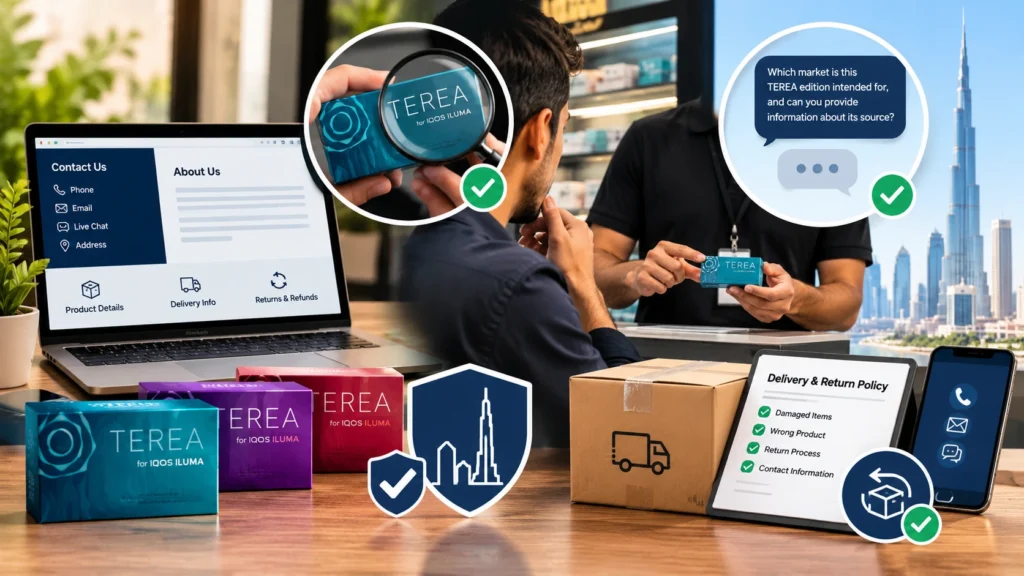
The seller can tell you a great deal about how confidently you can make a purchase.
Look for Clear Business Information
Before ordering online, check whether the store provides a clear business identity, contact details, and a reasonable way to ask questions or raise a complaint.
A professional-looking website is not enough on its own. Look at the information behind the storefront, too. Are the product descriptions specific? Does the seller explain delivery and return conditions? Can you get a clear answer when you ask about the product’s origin?
For a physical shop, you can ask the staff to confirm the variant, edition, and packaging details before paying.
Ask About Product Sourcing
You do not need to demand a long explanation from every retailer. A straightforward question is often enough to see how the seller responds.
For example, you could ask: “Which market is this TEREA edition intended for, and can you provide information about its source?”
A reliable seller should be able to explain what they know without making exaggerated promises. If they cannot provide a particular document, that alone does not prove the product is fake. However, vague answers combined with other warning signs deserve caution.
Where available, check relevant business and product information through appropriate official channels. Do not treat a retailer’s own claim of being an authorised seller as independently verified unless you can confirm it.
Read the Delivery and Return Policy
Before ordering, check what happens if the item arrives damaged, differs from the listing, or raises concerns about its condition.
A clear policy gives you a better understanding of your options if something goes wrong. Be cautious if the seller provides no usable contact information or refuses to explain how complaints are handled.
5. Is Cheap TEREA in Dubai a Sign of a Fake Product?
A surprisingly low price can be a warning sign, but it is not proof of counterfeiting.
Prices may vary because of promotions, stock availability, product editions, or differences between retailers. Instead of deciding based on price alone, compare the same variant and pack quantity across sellers.
For example, one listing may show the price for a single pack while another refers to a larger quantity. Make sure you are comparing like for like before drawing conclusions.
Be particularly careful when a seller combines an unusually low price with vague product details, unclear sourcing, and pressure to pay quickly. Several warning signs together matter more than one price difference.
6. Check TEREA Compatibility Before You Buy
Authenticity is not the only thing to consider. You also need to make sure the product is suitable for your device.
TEREA sticks are designed for compatible IQOS ILUMA devices, which use a different heating system from older blade-based IQOS models. TEREA is not intended for older blade-based devices, and HEETS are not designed for IQOS ILUMA devices.
If you are unsure which device you own, check the model name and its official user instructions before purchasing.
Never insert a TEREA stick into a device that is not designed for it. Using the wrong product can cause problems and may damage the device.
7. Warning Signs to Watch for Before Paying
No single sign proves a product is counterfeit, but the following issues should prompt further checks:
- Poor printing: spelling mistakes, blurry text, or visibly inconsistent packaging.
- Possible tampering: unexplained damage, disturbed seals, or signs of resealing.
- Unclear product details: the listing and pack show different variants or quantities.
- Unexplained codes: verification information appears inconsistent or leads to a suspicious destination.
- Vague sourcing: the seller cannot explain the product’s origin or avoids reasonable questions.
- Pressure to buy: the seller pushes you to pay immediately instead of answering basic questions.
- Unusually low prices: especially when combined with several other concerns.
A legitimate imported product may look different from a familiar local edition. Focus on the full picture rather than rejecting a product because of one packaging difference.
8. What Should You Do If You Suspect Fake TEREA?
If something does not look right, pause before using the product.
Keep the packaging, receipt, order confirmation, and any relevant messages from the seller. Take clear photos of the product details and the areas that concern you. These records may help when asking the retailer for an explanation or raising a complaint.
Contact the seller and explain the specific issue. If the response is unsatisfactory, consider the appropriate consumer-protection or product-reporting channel in the UAE.
Avoid making public accusations based only on a packaging difference. You may not have enough information to establish that the product is counterfeit, and imported editions can legitimately differ.
If you suspect that a product is counterfeit or unsafe, do not use it while trying to resolve the issue.
TEREA Authenticity Checklist for UAE Buyers

Before completing your purchase, run through this quick checklist:
- The product name and variant match the listing.
- The packaging has no obvious signs of tampering.
- Printed details are clear and do not contain obvious inconsistencies.
- The country edition and product information make sense.
- Any available verification feature has been checked cautiously.
- The seller provides clear contact and business information.
- The price and pack quantity are clearly stated.
- The product is compatible with your IQOS ILUMA device.
You may not be able to confirm every detail yourself. If important questions remain unanswered, choosing a more transparent seller is the sensible option.
Frequently Asked Questions
How can I tell if TEREA is genuine in Dubai?
Check the packaging, product labels, variant name, available verification information, and seller details together. No single visual feature can guarantee authenticity.
Does a barcode prove that TEREA is original?
No. A barcode can help identify a product, but it may be copied. Treat it as one piece of information rather than definitive proof.
Is imported TEREA in Dubai fake?
Not necessarily. Imported editions can have different packaging and product selections. Check the product’s origin, labelling, and seller information before deciding.
Can genuine TEREA packaging look different between countries?
Yes, packaging and labelling may differ by market or edition. Compare the product with information for the same edition rather than relying on a single online image.
Should I buy TEREA if the price is much lower than other shops?
Investigate first. A lower price does not prove counterfeiting, but an unusually low offer combined with unclear sourcing or poor seller information deserves caution.
Can I use TEREA with an older IQOS device?
TEREA is designed for compatible IQOS ILUMA devices, not older blade-based models. Check your device’s model and official instructions before use.
What should I do if I receive suspicious TEREA?
Do not use it while the concern is unresolved. Keep the packaging and proof of purchase, contact the seller, and consider the appropriate UAE consumer-protection channel if necessary.
Is buying from a professional-looking website enough to confirm authenticity?
No. A polished website does not establish that a product is genuine. Check the business information, product details, sourcing explanation, and available support options.